 Auf YouTube ansehen
"How Do You Know How Wealthy Someone Really Is?"
Auf YouTube ansehen
"How Do You Know How Wealthy Someone Really Is?"
Für dieses Video ist kein abspielbarer Embed freigegeben. Deshalb nur statische Vorschau und Link zum Original.
Volltranskript
Das Transkript ist das englische Original mit Timecodes. Die deutsche Zusammenfassung steht oben. Sprecher werden automatisch zugeordnet.
0:00And I think the single greatest differentiator between the poor and the middle class, middle class and rich, rich and the truly wealthy is how they see time. >> Mhm. >> And if you think about money as simply a condensed unit of time, right? That's all money is. Like you trade it for time I mean, you can trade time for money. So, like it is they're almost equivalent units. And the people who know how to master their time the most mean that they know how to master their money the most, right? And so, really if you want to master to the original question of like how do wealthy people come off this because they master their time.
0:29And so, time horizon is just like the perspective from which we see what we want to achieve. And so, if I am doing if I'm building a company from the place of like I believe that this company should exist, I believe this problem is worth solving, and that is where you start it from, then you build it differently. >> Versus >> Versus I need to make money. I need to make money this week. I need to make money tomorrow because >> What can I go make money with?
0:54>> Exactly. And so, I think like I mean, you've built this amazing brand here. If if people were able to not ask for 12 months and just serve. >> Dude, this is what I did when I launched this cuz I literally sold another company. I didn't I didn't make that much, but I had enough for like 2 years to live. I was living pretty frugal. I wasn't like I never bought anything fancy. It was like, you know, whatever food and travel maybe, right? But I was still sleeping on couches back then, you know, just cuz I wanted to save. I didn't want to spend it on hotels. I didn't start sleeping in hotel rooms until about 4 or 5 years ago.
1:28>> Oh, yeah. >> I would always find a way Who do I know in that town I can crash on? Anyway, side note. But when I launched School of Greatness 10 years ago, I remember saying, "I'm going to do this for 1 year cuz I I wish I had access to this. I wish this was a thing that I could go listen to in the world to teach me. >> Yeah. >> And I'm not going to try to make money. Like I'm going to do it for a year >> Yeah. >> all in, but I'm not going to try to make money. I don't want to make money. I mean, if the money came, great.
1:54But it wasn't my intention. It was just to how can I create the best content to serve people on the things that I wish I would have learned in school growing up. >> Yes. >> The School of Greatness. >> Yeah. >> And after 1 year, I was like, man, this thing is really starting to take off. >> Yeah. >> You know, but it wasn't based on how do I make as much money. >> Totally. >> It was how do I create something that can really make a lasting change. >> Yeah. >> And it that intention is what's made me sustainable for 10 years, loving the process.
2:20>> Totally. >> So, when people come from a place when you hear you say when they come from a place of that intention of service or because this needs to be in the world. >> It's art. Art exists not to do something, it exists to exist. >> Right. >> It's like no one says, why did you paint that? It's like >> Cuz it needed to come out. >> to I needed to express it. >> Exactly. And so, I think that if people chose their businesses that way, I think And don't get me wrong, I'm all about making money. Like, by all means, go get your back. You know what I mean? Like, as much as you can. By all means. But, I think that what it does is it ends up freeing you to then make your real impact because then you can start the whatever the next thing. And hopefully, your first thing is that realistically, it probably isn't. And all you have to do is look at every entrepreneur that's really wealthy, the amount of graveyard businesses they have in their back.
3:01Right. Right. And so, like, right now, if you're listening, and you're like, I'm not sure if this is the perfect business idea. Let me just save you the time. It's not because look at every other person who has been ultra successful, they have 10 failed business ideas. So, just like just start so you can just start notching off the bad businesses, right? But, extending the time horizon, I think only happens if you do shift the intention through which you're building it. Or you're just unbelievably self-disciplined. But, I think it's easier to just like start out with the right heart because I I small change, but I think it'll be worth it. Is that the reason that most people aren't successful, in my opinion, is that they sacrifice global benefit for local benefit. And that happens in all areas of life. You eat the piece of cake because you have an acute local benefit versus the global benefit of a six-pack that lasts for a very long time or better health, etc., right?
3:48>> You mean the instant gratification as opposed to delayed gratification. >> Yes. Exactly. And I just I like saying global I just like saying local versus global because it it it happens in in an organization, for example, sales guys don't want to put the notes in the thing because it's a pain in the butt to put the notes in the CRM. But finance needs the notes, customer service needs the notes, success needs the like all of these other departments need those notes for all the other things that we're going to do. And so it's a local cost but for a global benefit. And so I think if people were able to delay that immediate gratification which is like this is the nature of success.
4:21>> Mhm. >> I think there was so funny, man. >> There was the study that was done, I can't remember it. >> Is it the marshmallow test or the uh >> Okay. God, I could talk about the marshmallow test. [laughter] Okay. So, fun fun one with that with the marshmallow test is measuring how long they delay for the marshmallow. >> Uh-huh. >> So, at what point does it not make sense? If they say you can get one cuz it cuz they like to everyone simplifies the experiment which is like if I give you a marshmallow, one now or you can get two later, right? But what if two is in a year?
4:51>> Yeah, you're like, I don't care. I'll take the one now. >> Right. So, then the next question I would have is like if you were to test kids and then say at what point the global versus local crosses would be and then track the kids who had the longest marshmallow waiting period. >> They're the most successful probably in life, yeah. >> Really interesting. Just total side note. But the three things that I think were in common of the ultra successful were uh inflated sense of self as in they thought that they like they deserved big things, they wanted to go after big things.
5:19>> Believed in themselves, right? >> Inferiority, never being good enough. >> Mhm. >> And impulse control. >> Those are the three factors of the most successful. >> They like when they did a common factors analysis, they like these people think they believe that they can achieve all this amazing stuff and then it it's just it's an amazing paradox because at the same time they think they're not good enough and they are insecure about whether they they can achieve it. And they have impulse control. And so it's like if you
5:45>> Discipline, yeah, yeah, yeah. >> Right. And they just they they and they stay focused on the thing. And what I like I'd say the biggest breakthroughs that I have had I think that will create a lot of the wealth that we will have in the future is is really a deep understanding of how long long is. And shooting with the intention of like I'm only bringing this up cuz my YouTube guy said it. He's like, I've never had somebody who actually started that. I was like, we'll see what we do in 5 years. >> [laughter]
6:11>> I was like, we'll measure then. And he was like, no one has literally ever said that to me. I was like, as long as I see progress, I'm good. >> Cuz everyone wants results in like 2 months, you know. >> Yeah, yeah. Like if we're make if we're going this way, I'm cool. I don't need to see like that's good enough. For most people if if they could extend the time horizon cuz like I'll give you another hack. You can know how wealthy someone is based on the time horizons they speak in. >> Give me an example. >> So if someone's talking about how they're trying to make, you know, make money this today.
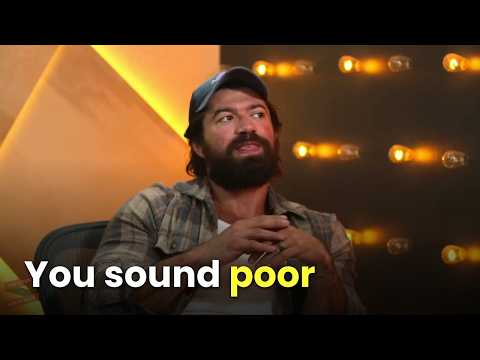
6:39I hate let me hold 20 for today. You know how you know how poor they are. I have to say poor. Like you know how poor they are. Right? If someone's talking about what they're going to make this week or this month or this quarter or this year or this decade. You know how different the people are who are talking in those time horizons. And so I think that if we can shift the time horizon that we think in then we gain more leverage over our time which we then know we will compound into money.
7:06>> Yes. >> Because I think if you can master the time, you master the money. >> That's good. [laughter] >> If you like this video and you're business owner who wants to break through your current revenue ceiling, I distilled every lesson from scaling 10 businesses past 10 million and three businesses past 100 million into a completely free scaling road map that I've used to go from zero to one, zero to 10, and zero to 100 plus. And so you can click here and you can check it out.
7:37Again, absolutely free. And since you're business owner, I appreciate you and enjoy.