 Watch on YouTube
"What If You Had Five Years Instead of Five Minutes?"
Watch on YouTube
"What If You Had Five Years Instead of Five Minutes?"
This video does not allow embedding, so you get a static preview and a link to the original.
Key takeaways
- Would you build it differently?
- >> I had a mentor tell me this um a long time ago that like really stuck with me, which is the fastest way to build a $10 million business is not the fastest way to build a $100 million business.
- Well, even in the fastest way to build a million dollar business is not the fastest way to build a $10 million dollar business.
- You would And so I think um to your point, one of the still outstanding competitive advantages that you can have as an entrepreneur from the thinking perspective is just thinking longer.
Chapters
-
0:00
Abschnitt 1 A new idea that sprang into my mind over the last, I'd say, 3 to 4 months that I've kind of been chewing with is this idea of what happens when you go long.
-
2:41
Abschnitt 2 And and that's you So this is that becomes the value of the business.
-
5:21
Abschnitt 3 >> Yeah.
-
8:39
Abschnitt 4 Because we solved the most important part first, which is that the revenue stays.
Full transcript
Locally archived YouTube transcript with timecodes. Speakers are assigned heuristically and may be corrected editorially.
0:00A new idea that sprang into my mind over the last, I'd say, 3 to 4 months that I've kind of been chewing with is this idea of what happens when you go long. >> Mhm. >> So, long-term thinking and how you build differently today if you just extend the time horizon. And then how you can like beat competition just by instead of thinking in terms of okay, you know what founders they all always think in terms of 5 years and then exit. But what happens if you think in terms of like 50 years? What are the different decisions you make in terms of the foundational blocks?
0:28>> Yeah. >> And this is why I have these blocks. Cuz I saw you do something on YouTube with some blocks before. Could you explain this idea of sort of long-term thinking in terms of foundations? >> We do this exercise in person with entrepreneurs cuz I think it's so powerful, which is if I were to say, "Hey, build me the tallest tower using a series of blocks. If I say you have 5 seconds, you're going to you're going to you're right here, right? And that's that's all you got. And you're like, "Oh, it's time. Hands off." If I said, "Okay, now let's assume we had a little bit more blocks than I could build in in 5 seconds." And I said, "Okay, what if I said you had 5 minutes? Would you build it differently?
0:59What if I said you had 5 days? What if I said you had 5 years and you have unlimited blocks?" >> Right. >> Yeah. >> And so what happens is the foundation completely changes based on the height of the building because of the time horizon you're thinking in. >> Yeah. >> I had a mentor tell me this um a long time ago that like really stuck with me, which is the fastest way to build a $10 million business is not the fastest way to build a $100 million business. Well, even in the fastest way to build a million dollar business is not the fastest way to build a $10 million dollar business. Like you could probably build a one-person agency to a million dollars a year pretty quick.
1:28>> Right. Yeah, it's just like it's just you could do it really quickly. Getting to a hundred though, you you think about it differently. You would And so I think um to your point, one of the still outstanding competitive advantages that you can have as an entrepreneur from the thinking perspective is just thinking longer. >> Yeah. It's really been from the mindset of It's funny cuz when I started thinking about Do you know why it is? It's because I told myself in this season of life >> Mhm. >> that I was going to do the business that I'm running now, which is our holding company called steven.com, forever. And I immediately noticed that I made a different set of decisions. I started thinking about the factory I called it, which is, you know, Elon's example of it's building a prototype is easy, building the factory that builds the cars is 50x harder. I started obsessing over the factory, which in in part in this analogy could also be seen as the foundations that we lay to make this durable over the long term. And then speaking of Elon, I look at the decisions he made with both SpaceX, which I'm an investor in, and Tesla, where he was like, "You know, I could have bought the batteries from Ford, but I'm going to make a completely new battery from scratch. You know, um I could have used other people's electricity chargers, but I'm going to build the entire charging network across the United States from scratch." And this is someone who's thinking long-term. And what happens then is they have the most durable moat 7 years from now.
2:41And and that's you So this is that becomes the value of the business. And actually it was all a byproduct of just thinking over a longer time horizon. Entrepreneurs and startup founders, as you know, we like rush to like get the exit, raise as much money as you can. And it looks like you're you're in an unstable building there. >> Yeah. It looks like that. >> Strong wind, right? >> [laughter] >> I could blow that over. >> Even during the exit process, if it's a fast, you know, company, it's like you're kind of like, "Just please stay.
3:07Just Now everything stay fine. >> [laughter] >> No one leave." You know, they're like, "No big accounts go away." Like you're just like holding your breath for 6 months and being like, "Please just go through." >> And then if it goes down to this for like a a week or two and they're like, "Hey, why are the billables down?" You're like, "Uh no, it's a it's it's a momentary It was expected. It was actually in our Did I not send you the update before Like it's a whole thing." Um and I'll do with the drawing cuz it might be it might be a little bit easier, but like if you were to build a 100-story building, you'd have to dig way deeper, you'd have to have a much you'd have you build different with different materials going up. And so there's a 100 decisions that get made that if you're doing 100 stories versus one, you would you choose differently. And so where it gets really tough is that people will they want to have it all. And so they say, "I want to have the speed of building a one-story building." But then they get to one story and say, "Well, actually, I want to get I want to have a 10-story building." But the foundation wasn't right. And so this is where entrepreneurs will they'll do this, they'll they'll skyrocket here, and then they and then they plateau.
4:08>> Mhm. >> And then sometimes, unfortunately, the correct step is that you have to take two steps back, rebuild the foundation, and then it goes up again. >> Mhm. >> And so I think to your point, focus and patience are the two enduring competitive advantages because they're so anti-human. >> Yeah, so anti-human, so anti-Instagram. I've got no announcement to make this month because I'm doing boring Like hiring. Like Bezos, like the decision I still think about this, like the decision that he made that he was just like, "I'm going to have a logistics company be my competitive moat." He's a like he started as a bookstore online. And to go from there to like, "No, we're going to own the trucks and the warehouses and be better at warehouse and delivery than anyone else."
4:54>> Mhm. >> That's what we're going to do with our online internet business. >> Mhm. >> Like just But like who can unseat Amazon right now? Really tough. >> What's interesting as well is that at that particular moment now where the entrepreneur is this they they come to people like me and you in the street and they say >> What do I do? >> They are I can't get past here, I'm bottleneck. >> Yeah. >> What is it that they should have done? So many entrepreneurs come up to me, they might hit, I don't know, 500k revenue, a million revenue, and they come up to me and they go, "I don't know what to do. How do I get to 10 million from here?"
5:21>> Yeah. >> And I think in part what you're saying is they they should have made a decision earlier on to build a slightly different type of company from zero. >> I'll say what the million-dollar business owner is missing when they're trying to get to 10 is what they would have done differently is they would have stayed longer in the product market fit phase or trying to make sure that the customers who come in keep wanting to spend money with them, which they either do periodically, so like if you buy a soda that you like, you keep buying it. It's not like you're on a subscription, but you just buy it regularly. On the other hand, there's subscription revenue, which is truly recurring, uh like your Netflix subscription, whatever.
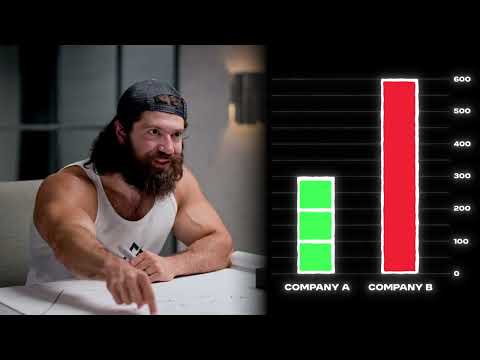
5:53But, they know that when that customer comes in contact with the business, they're going to stay, and that money's going to keep going, which is what allows it to stack. And so, if we think at the most basic level, if every time you get a customer that never left, then the business will do nothing but grow. It will either stay the same or it will grow whenever you get a new customer, it just keeps growing. And the difficulty of get the the the $1 million entrepreneurs is that getting to a million dollars you can do really quickly or 10. And I know that the the world is like, "I can't believe that." I promise you you can do it if you just learn enough skills. Um but that can happen really quickly because it just doesn't take a lot of moving parts to make it happen. Getting to a hundred or getting to a billion dollars revenue, I haven't gone to a billion yet, but I I feel confident I know what we need to do. The million dollar entrepreneur is trying to fit a billion dollars of new sales in in one year. Mhm. And that's [clears throat] the problem is that at the at the end of next year, because all the customers they signed up to make their million dollars are gone because they aren't good enough. They have to go back to the market, market and sell, and get another million dollars worth of customers. So, they think, "Oh, if if I if I'm going to get to 2 million dollars a year, I have to go sell twice as many customers," which is true. But if we had to compare two companies, let's say we have company A and company B. All right, we got company A and company B. They both are selling a hundred, you know, new widgets a year. Okay.
7:01Let's say company B loses all of the hundred, but they want to double because it's an entrepreneur, he's like, "I got to grow." And so, he sells 200 people year two. Well, then let's say he's got $2 million in revenue, and he's got $1 million in revenue here. And let's say year three, uh he sells 300 units. He lost all 200 again because he has no stickiness. And so, he makes $3 million. Okay, cool. >> [snorts] >> Now, let's say this company A sells a hundred year one, they make a million dollars. They keep all hundred customers. Okay? But let's say that that company keeps the same number of people they're selling new. So, a hundred new customers come in this year, but they keep their old hundred. So, now they have also have 200 customers and do $2 million. And then year three, they keep their same hundred and then the hundred from year two. So now they have 300 total customers cuz they got 100 new.
7:46And they have 3 million. So both of these businesses on paper, your entrepreneur friend comes to you and says, "Hey, I've got a $3 million business. And I've got a $3 million business. Which one do you invest in?" >> Mhm. >> [clears throat] >> Now, you and I do this every day and we're like, all day we do this one, not this one. Because next year, he's got to go and sell 600 new customers. Now, where this gets you can start seeing this in the financials because I can tell you that the cost of getting 300 new customers costs significantly more than the cost of getting 100 new customers and having 200 customers that are existing and still paying you. And so you're going to see that in the bottom line getting compressed. And this is where you know, growth at all costs becomes a problem. But for this entrepreneur, he spent the time to figure out how to get all 100 customers to stay. Now, if he encounters your distribution or my distribution, and then all of a sudden we say, "Great. Now I know that I can bring this thing 10,000 new customers." Then this thing becomes a billion-dollar business.
8:39Because we solved the most important part first, which is that the revenue stays. And so when people build in a rush, they don't build a good enough thing. And so as a result, you scale really quickly and this is where knowing marketing and sales can be dangerous because the better you are at marketing and sales, the faster you can grow revenue. But you get to a point where you you have a certain velocity of sales. I can only sell 100 people or 200 people or 500 or 1,000 people a month, whatever it is. And at that point, you either have to always be seeking more distribution because you have a hole in the back of your bus. But the moment the sales stop, the business craters. And I would say that that is more common than the alternative, which is that you actually have a sticky business.
9:13>> The other thing people talk to me about when they come up to me in the street, when they hit that moment where they're doing about a million in revenue, is they say, "You know, my customers love me. They keep coming back, but I've run out of time, basically." >> Yeah. This is an interesting one because a lot of times if I have the same response where someone says, "Hey, I'm running out of time." The first question I'll ask is, "What's your margin?" If they have really thin margins, they can't afford to get help. That's the symptom, but not the root cause. The root cause is either that they are offer is incorrect in that what they're offering at the price and the terms of their delivery are too low compared to each other. You're offering too much for too little.
9:47>> Mhm. >> [clears throat] >> Or you don't have a marketing or sales motion that allows that value to be demonstrated to someone so they'd be willing to pay a premium. >> On pricing then, how do you think about pricing? Is it a subjective thing or is it an objective thing? I Do I go look at the market and see what everyone else is charging and then decide that or is it what I feel like I deserve? >> [laughter] >> I think what we feel we deserve matters the least in that in that I think it's all about what the customer is willing to pay. And so one of the hardest parts were for newer entrepreneurs is they sell out of their own wallet.
10:16>> What do you mean? >> And so it's like if I have somebody who's really good at fixing cars but they're like, well, it's not that hard. You just, you know, do little screws here. Like I wouldn't I wouldn't pay anybody for that. Like I do it for free. It's like, yeah, but I don't want to do it and I would pay you a lot to do it because I don't want to fix my car. And so because it's been easy for you, you think it's easy for everyone and because you think it's easy for everyone, you're not willing to charge a lot for it. >> Mhm. >> And so they get into this vicious cycle of undercharging and having not enough margin and then as a result having to do more of the work and then if they get more work come in, they don't want to say no and so then they basically fill up their entire plate so they have no excess capacity but then they can't they don't have the time to train anyone, they don't have time to interview, they don't have the time or or the or the cash, right? To to afford the next person. And so usually when someone's like, I'm overwhelmed, if I say, do you have a lot of margin? Then either yeah, you're running 70% margin, dude. Like hire some help. If they don't, then it's two or three steps earlier where the offer's wrong, the sales motion's wrong, which is typically that they're mispriced.