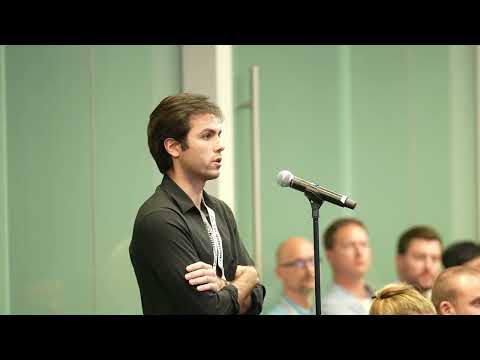
 Watch on YouTube
"My Industry Is Being Bought Up. Do I Start Over?"
Watch on YouTube
"My Industry Is Being Bought Up. Do I Start Over?"
This video does not allow embedding, so you get a static preview and a link to the original.
Key takeaways
- Uh kind of been built on relationships and road warriors and I'm trying to figure out if I continue to ignore the end customer or if I look at, you know, building a consumer-facing brand that has a little bit more leverage, has some end down demand.
- Um >> can handle more customers, correct?
- So then this would be a demand problem.
- >> Our reps need to service local accounts, so they go and, you know, it it's not a one-time sale.
Chapters
-
0:00
Abschnitt 1 Alex.
-
1:54
Abschnitt 2 >> ticket, but like they're buying many frames at a time, correct?
-
3:55
Abschnitt 3 And so, that would be my like cuz that's the that's the smallest change to your existing business, and I'd rather go attack that.
-
5:55
Abschnitt 4 >> If the unit economics work a lot better for that than they would for selling to private equity, you know, it'd be more I'd rather you just run ads to optometrists and say want t
-
7:44
Abschnitt 5 Um Or alternatively, you run ads to optometrists and all you have to do is learn a remote sales motion.
Full transcript
Locally archived YouTube transcript with timecodes. Speakers are assigned heuristically and may be corrected editorially.
0:00Alex. >> Hello. >> My name is Maddox. Uh I sell optical frames to independent opticians and a couple uh big box stores. >> Cool. >> Um last year we did just over 4 and 1/2 um and the problem that I'm facing is a growing market but a shrinking channel. >> Okay. >> Uh so >> it's consolidating? >> Yeah. Private equity has been rolling up um for the last couple years. We've gone from 13,000 independent opticians to 12 in like 24 months.
0:32Um and also competitors have their own branches that are doing this in-house. Um so you know, we're selling a commodity product. Uh margins aren't great. Uh kind of been built on relationships and road warriors and I'm trying to figure out if I continue to ignore the end customer or if I look at, you know, building a consumer-facing brand that has a little bit more leverage, has some end down demand. Um that's the kind of crossroads I'm at.
1:03>> revenue go down? >> It it's been flatlined for a couple years. >> A few years. >> Okay. Has it been flatlined because people are not reordering? >> No, we have pretty good um retention. A- a- and it's built on, you know, personal relationships with the reps that >> issue? >> No, it's not that it's an acquisition issue. Um >> can handle more customers, correct? >> Yes.
1:27>> Okay. So then this would be a demand problem. >> Our reps need to service local accounts, so they go and, you know, it it's not a one-time sale. They need to be ongoing service. They they want to see them every month or so. >> Okay. >> Um so we want to make sure that we're able to expand geographically uh but it's also low ticket and long cycle. >> Mhm. >> Um so
1:54>> ticket, but like they're buying many frames at a time, correct? So I mean it's just B2B, it's wholesaling, right? Um So I want to make sure that you don't kill a good thing because of something that hasn't happened yet. Because starting the direct-to-consumer business is an entirely different monster. It's a new brand, there's there's a bunch of stuff there, right? Um Cuz if you were to think of all the commerce brands that I would start would be would frames be the first one you'd start?
2:23>> So frames is kind of limited by the prescription complexity. Um this would be just establishing consumer awareness around a brand, but you could sell peripheral products on glasses, that kind of thing, right? >> Yeah. >> Uh and then >> the company that you would start fresh? >> Yeah. >> If you were to like start any company? >> Probably because the sales velocity is a lot faster. You don't have to build relationships and you know, um take years to open an account that does maybe $1,000 a year.
2:49>> Do you want my blessing to do that? Or [snorts] >> Uh yeah, that's honestly kind of the the inflection point. It's like [laughter] do I do I invest in in in more reps or do I kind of pursue this this other channel? >> Well, I think that what I'm trying to get to is like is the consolidation of the industry actually something that is limiting your business? That is what I'm trying to get to. I mean I think it's obviously a big boogeyman, but like is it actually changing? Like are they now cutting you out and finding somebody else? Okay, this is why I asked um okay, cuz you said retention's really good. So if they're cutting you out then your retention wouldn't be as good.
3:25>> For for non-acquired accounts, yeah, retention is good. If an account gets acquired, they usually go to a larger supplier or the supplier themselves is the one that acquires the the practice. >> Got it. So I would say I I would probably run down one door really hard. Um which is I would approach the private equity groups and say, "Let me do your whole portfolio and you get a super for deal." Cuz that's all they're doing, right? They're just one level up the food chain from you, but they still need frames.
3:55And so, that would be my like cuz that's the that's the smallest change to your existing business, and I'd rather go attack that. Now, if for whatever reason you're like, I really don't want to do that, then you can jump from this boat to the next boat. I I hate to kill businesses when like they're not actually dead, you're just flat. Um And so, it's just it's a totally different game. Again, there's nothing wrong. There's people here who are doing direct to consumer. Like it's a just a different different game and and from how many how you how many years you've been doing this?
4:27>> This has been around for 7 years. >> Okay. So, this is what you've been doing for a while, and you've never really sold direct to consumer. >> Right. >> So, that is why like there's a smaller skill gap for you to learn how to sell to private equity, and those are bigger bigger tickets, and still keeps the existing company you have more and more valuable, cuz you close a handful of those deals, and your business goes from 4 million to 20 million. And then, if you want you want to sell the business someday or not? >> Yeah. >> Yeah, and like guess who would love to also buy it? The customers.
4:56And so, you kind of get a two birds one stone effect there, where you're going to your potential acquirers and just saying, "Hey, let's work out a deal." They might also just say like, "We'll do this thing if we can get an option in the business to buy it later." Great, then at least you have an elegant exit that you can work out there, because they're going to want to vertically integrate and that's their whole story. So, I would rather like maybe do that, and then you get a nice little payday, worst case scenario, and then you have cash you can do the next thing. I just I'm very hesitant to kill something that you spent 7 years building, when you can take the same skill set, level up a level, potentially also get an acquirer, and worst case just keep making more money.
5:30>> I would say this is less killing something. This is and I understand that's a completely different animal. Um I would say that the the goal would be to generate inbound in a way that we're not currently doing, because the reps are serving local accounts. >> of inbound from optometrists? >> Mhm. >> I think that's going to be not the most likely. I think you'll just sell people sunglasses. >> Yeah. >> I don't think you're just going to all of a sudden get optometrists inbound.
5:55>> If the unit economics work a lot better for that than they would for selling to private equity, you know, it'd be more I'd rather you just run ads to optometrists and say want to get better prices on frames. If you want to get inbound from optometrists, let's just go get inbound from optometrists. But if that's the case, then the private equity boogeyman's not actually an issue. >> Uh Yeah. >> Right?
6:20>> Yeah. >> So this is why is this a demand problem, right? So if it's just a demand problem and your existing channel doesn't work, but you think you can just go sell ads direct to get optometrists to come buy stuff from you, then we can do that. You can go to private equity. Like either of these are expanding your existing business, which I much prefer to starting a direct-to-consumer line. So if you think that sounds better to you, it's just like cool, let's just run ads to optometrists and have them fill out forms and then then we can sell them frames. Hunky-dory.
6:48>> We would be supply-constrained in that case and that we wouldn't have a a physical rep in that area to service that account on an ongoing basis. >> Well, when you think that people are going to be reaching out inbound, how do you think you're going to sell them? >> Yeah, that's true. >> All right. >> Yeah. >> [laughter] >> All right, I think you can just do a phone sale. >> Yeah. Okay. >> And show them the frames and it's like, oh yeah, they're like, oh, can you have somebody in person? It's like, honestly, that's actually not how most people do it. Um So, do you want to buy them?
7:13>> [laughter] >> So on the more better new, you would just say better. >> Yeah, I would rather you you have two things that we went over that you could do alternative to killing the business in cuz all of the objections you had on this side will still be present in the alternative scenario with more risk and more distraction. So if you want to have an inbound channel, which means we just need to increase demand, we either go to the top of the food chain, have them sell super wholesale, and then also potentially have an acquirer who knows who you are who definitely will want to vertically integrate. Or alternatively, and you're also at the size that they would love to buy you.
7:44Um Or alternatively, you run ads to optometrists and all you have to do is learn a remote sales motion. Learn the PE sales motion, learn the inbound sales motion remotely. Which one would you rather do? That's probably the much lower risk next step to I'm going to start a consumer brand and then hope optometrists are respond to it. >> Does the sales velocity in a consumer brand versus a you know, ongoing contractual thing with an account make that any more attractive, you know?
8:12>> No, not at all. >> Okay. >> It's the opposite. >> Yeah. >> A B2B business that has super high revenue retention is significantly more valuable than a one-time transactional consumer brand. Unless you have a monster brand, in which case then they basically see the brand as a distribution base they can create new products and sell through. >> Okay. Awesome. Thank you. I appreciate it. >> Yep. >> [applause] >> That was actually a really fun one. I thought that was a lot of fun. If you like this video and you're business owner who wants to break through your current revenue ceiling, I distilled every lesson from scaling 10 businesses past 10 million and three businesses past 100 million into a completely free scaling roadmap that I've used to go from zero to one, zero to 10, and zero to 100 plus. And so you can click here and you can check it out. Again, absolutely free. And since you're business owner, I appreciate you and enjoy.