 Watch on YouTube
"Should I Sell the Tool That Gives Me My Edge?"
Watch on YouTube
"Should I Sell the Tool That Gives Me My Edge?"
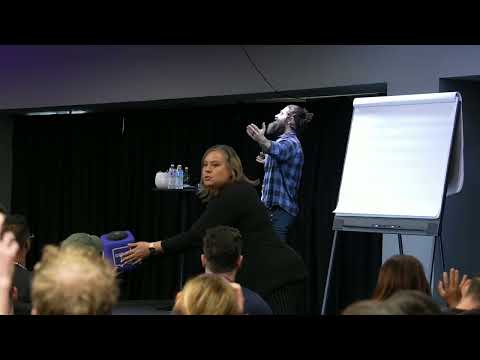
This video does not allow embedding, so you get a static preview and a link to the original.
Key takeaways
- >> So, we scaled uh the sales team we're in solar from 20 to 4 >> 100 reps.
- It solves a majority of the industry problems and our feedback loop is our sales reps and leaders and ops.
- And so, you have 400 solar sales reps and they sell solar roofs or whatever every all the every day.
- So, what Yeah, I I don't I don't see why you'd want to why you'd want to white label.
Chapters
-
0:00
Abschnitt 1 Yeah, what's up?
-
1:27
Abschnitt 2 Like, what's the benefit of white labeling it?
-
2:50
Abschnitt 3 It makes sense.
-
4:10
Abschnitt 4 >> Well, it sounds like you've already made that choice.
-
5:34
Abschnitt 5 And then, secondarily, having like if you look at like law firms, like high-skill uh consulting firms, high-skill accounting firms, high-skill, almost all of them have like partner
Full transcript
Locally archived YouTube transcript with timecodes. Speakers are assigned heuristically and may be corrected editorially.
0:00Yeah, what's up? Cool. >> So, we scaled uh the sales team we're in solar from 20 to 4 >> 100 reps. >> Yep. >> From the same the same group also. >> Oh, really? >> From 20 to 400 reps in the past uh 2 years. >> 20 to 400? >> Yes. >> That's awesome. Congrats. >> While doing that, we also doubled down on software and tech. So, we built our own software and tech from scratch. It solves a majority of the industry problems and our feedback loop is our sales reps and leaders and ops. >> All right. >> So, we're able to keep iterating and making it better.
0:26>> Cool. >> Now, we're at a point where one of our strongest recruiting tools is our software. >> Okay. >> However, also there are people that won't come into the company directly. They want to stay with their own company or continue to build their own. >> Uh-huh. >> So, we're at a point now where I'm just trying to decide is it something worth going down the path of white labeling a license or keeping the competitive advantage within. >> Keep doing what you're doing. So, um yeah, just keep doing what you're doing. Just like it's uh it's a big shiny object.
0:56>> So, the idea of having a I mean, to potentially a much better LTV to CAC ratio with software. >> So, when we're saying so, you own a solar company, correct? Okay. And so, you have 400 solar sales reps and they sell solar roofs or whatever every all the every day. Okay. And so, you have software that allows them to just do their jobs better. >> Yes. >> Okay. So, what Yeah, I I don't I don't see why you'd want to why you'd want to white label.
1:27Like, what's the benefit of white labeling it? >> I was just torn between the idea of competitive advantage within, recruit people here >> Sure. >> versus the idea of well, there's always going to be a huge amount of people in the industry that won't come within my company >> Uh-huh. >> that would definitely pay for this cuz people ask for it all the time for the software. So, I'm torn between that idea if that makes any sense. >> Yeah, it's just a missed opportunity, not a problem. >> Okay. >> Like, this is super important to not make the mistake.
1:53>> Okay. >> But, it takes you zero effort to not do it. And so, like, think about this way, it's like in order cuz I'm guessing on some level you're like, okay, well, this could increase the enterprise value of my company. I'm guessing that's the thought >> And it goes into the follow-up question, which is I I've obviously heard tech is a multiplier, but how does that apply if the tech itself is not generating revenue necessarily? >> Right. Yeah, so the only so, basically, you will get all the benefits of the tech you have in the multiple already.
2:18>> Okay. >> Because it'd be tech-enabled. If you wanted to sell as a quote SaaS software, you you're not. You're you're like it you'd have to it makes no revenue right now. You'd have to figure out a revenue a revenue model, and then all the while you're figuring all this stuff out, you have your solar business, which is obviously crushing it. >> Yeah. >> Like, it's just don't bother. >> Okay. >> It's just not worth it. Keep the edge, keep the advantage. It's a competitive moat for you. It's very standard for a business after a certain size to start developing internal tools. It's just normal. It just streamlines processes.
2:50It makes sense. And it's actually a fairly common question. It's like, hey, we built this thing for ourselves. Slack built a tool for themselves, and then Yeah, but Slack wasn't doing probably 200 mi I don't know what you're doing, but I'm guessing 100 plus a year um with 400 sales guys. Like, they were making no money. >> Yeah. >> Right? And so, the amount of money that you'd have to generate from the SaaS for the SaaS to Like, you're not going to get SaaS multiples on your existing revenue.
3:15You would just have a small SaaS company that would get a SaaS multiple, and then they would add on what your Like, the guy who's writing you a check for 500 million is not an idiot. >> Yeah. >> He knows it's not SaaS. You know what I'm saying? Like, you'd have to transform into a different business, which why on earth would you do that? >> Super helpful. Thanks. >> Hi. I'm the chiropractor that you omnipotently knew yesterday was a chiropractor. >> I channeled you. I channeled you.
3:41>> Um I just had a quick question. I related it to your story yesterday of being the dancing bear. So, I was the main provider. We've grown. I've got uh uh two associates underneath me and some other people, but when did you make the decision to be more of the dancing bear and less of the main one, you know, as a doctor and my job was mainly to see patients. Now, that's kind of transitioned into I found out I'm the better dancing bear. So, I'm leaning more into that. When do you make that choice?
4:10>> Well, it sounds like you've already made that choice. >> Well, I'm still doing half and half. I'm just double timing going to the social media in between patients. >> Well, do you need to do the seeing patients? >> Uh I do bring in a good chunk of the revenue still, so I think if I did stop, I that would hurt the revenue. >> So, can the person that you Is the other person you have fully booked?
4:33>> No, and I am training them. >> Okay. Yeah, I mean, you'd want to So, typically with high-skilled labor businesses, which is what you have, right? So, it's not like uh Well, like shoot, a hair salon. I don't know. Like it's it's it's harder to become a chiropractor than it is to become a hair hair stylist. Um no disrespect to Where's my hair guy? Saw you yesterday. Yeah. Yeah. Yeah. A little I mean, a little ours, yeah. A little hair.
4:58Um what I've seen in terms of private expansion of service-based business, but you know, in four walls, is that you risk like if you if you Do you want to expand to multiple like more locations? Is that kind of the the the thought process? Yeah. So, if obviously you want to train this person up, you want them to be able to take on the full workload. And I think that having a path to like 20% ownership um is fairly cuz otherwise like they'll be a they'll be loyal to that person. And so, that person could walk with your whole practice, which would suck, right? And so, adding one probably more chiros will help kind of uh over time like decrease that risk.
5:34And then, secondarily, having like if you look at like law firms, like high-skill uh consulting firms, high-skill accounting firms, high-skill, almost all of them have like partnership like path to partner type things. And so, it doesn't mean that you they have to be able to like get 100% of the business, but typically 10 to 20% um of like the upside. Now, that doesn't need to be actual equity. It can just be a profit share and um something called a a profits interest, which is basically like in the event of a sale they would get X percent. And you don't need to give it up front. You can say, "Hey, over the next 5 years I'll vest you 2% a year."
6:07Um and a lot of people that's like you want them to feel like it's their their facility. And you want them to have their picture on the door where it says, "Hey, I'm Jerry. I own and operate this, you know, Chick-fil-A." Same idea. There's a reason they have them put the picture on the door, even though that they're not really the owners of the business. And so I would, yes, lean into promotion. It's a higher-leveraged skill. You're naturally doing that because you're realizing it makes you more money per unit of time. Um and the skill that you'll have to get into is recruiting, hiring, training, and culture.
6:38Because when you scale people, that's the business. >> Yep. That makes sense. >> That help? If you are a business owner and you are not growing as fast as you like, I'd like to give you a free gift. So, my team and I put together the $100 million scaling road map, which is basically 200 hours of us looking over all the portfolio companies we've had and what stages of growth they went through and more importantly, where they got stuck and how they got past it. And so we broke it into these 10 stages and we made this little kind of quiz thing where if you put in your business information, it'll tell you where you're at and the most important part for you, what to do for each of functions of the business across product, marketing, sales, customer success, recruiting, IT, human resources, and finance. And so, no matter what you're struggling with, someone else has already struggled with it and solved it. And so I'd like to give you this thing absolutely free. You can go to acquisition.com/roadmap, plug in your business information, and if you want us to actually help you deconstruct the business and you're trying to scale, we'd love to help you out. On the thank you page, you can just book a call with my team and we will look at the business, see if we can help, and if we can, we'll invite you out to Vegas and we'll do this in person live.