 Auf YouTube ansehen
Should I Franchise or Own Every Location Myself?
Auf YouTube ansehen
Should I Franchise or Own Every Location Myself?
Für dieses Video ist kein abspielbarer Embed freigegeben. Deshalb nur statische Vorschau und Link zum Original.
Volltranskript
Das Transkript ist das englische Original mit Timecodes. Die deutsche Zusammenfassung steht oben. Sprecher werden automatisch zugeordnet.
0:00Uh, my name's Thomas. We are Vietnamese Coffee Company. We own one flagship cafe, two hybrid model franchises, and about to launch DDC coffee subscription. >> Okay. >> Yeah, and we're doing about 2.1 million in the cafe. Um >> In the the one cafe, and then you have the two franchises.
0:24>> The two caf- the two franchises we make about 60 to 70k net per franchise. >> Annually? >> Annually. >> Are they like super small, like little bodega? >> plugging in our cafe into their food service. So, we're like >> Like any businesses food service type thing? >> Yeah, we're just plugging in our coffee brand or shop or like micro hybrid coffee into their existing business. >> Got it. And they make 60k net? >> Yeah, we make 60 to 70k net, depending on the
0:51>> What's revenue? >> Their revenue is about uh, 700k. >> Each? >> Each. >> Really? >> Yeah. >> Low margin. >> Well, it's kind of like uh, franchise hybrid model. So, that's why we're only taking about, you know, 7 to 8% >> Mhm. >> of their their revenue. >> Oh, wait. You're the franchisor. >> I'm the franchisor.
1:17>> My bad. Got it. So, you have your one flagship store. You have two franchisees. >> Yeah. >> You're the zor. >> Yeah. >> So, you only have two open. >> So, we have ours open and two franchise stores that are in hybrid. Yeah. Franchisee franchises. >> Yeah. Um, and then the the last piece was the a direct-to-consumer brand. >> Yeah, we're about to launch direct-to-consumer just cuz we sell [snorts] retail, like why not and bring it online. Subscription model sounds, you know, sexy.
1:44Uh Yeah. And so, uh, what's stopping us I think from >> what's stopping you, but All right, go go ahead. >> Uh, building out a team or model that supports multi-location like launches. >> You haven't started the You haven't launched the direct-to-consumer brand, right? Can we not? >> Yeah, we cannot.
2:11>> Lena. >> [laughter] >> Hm? >> Yeah, we we haven't started. >> I I It would mean the world to me if you didn't. >> [laughter] >> Yeah. >> For your own sake. >> Yeah. >> I'll be fine. You know what I mean? Um You're I mean, your franchise Imagine Let's flip the tables for a second from an ethical perspective. You sold I'm guessing friends and family or people you know into the bodegas that you have the the little shops, right? >> Yeah. >> Okay.
2:37How would you feel if the person you sold to the franchise is now completely shiny object-ing over here and they're not thinking about your business? >> Mhm. >> I wouldn't be stoked about it. How many franchisees do you have in the pipeline to sell? >> So, right now we're kind of in that position to think about what kind of model we want to choose to scale, like self-owned versus franchise. >> Great question. Love this. Good direction. Let's talk about this. >> Yeah. >> Okay, so each each of the stores is a 700k top line, right? Somewhere in there.
3:05>> store does 2 million. >> I know that. Them. >> Yeah. >> Franchisees. So, they do 700k top line, the hybrid model, right? What's their bottom line? >> Their what they're making? >> Yeah. >> So, we net about They're probably netting about 20% >> After your >> 20-25% >> After your 8% or before? >> Uh that's after. >> Okay. >> After the 8%. >> Okay, got it. So, on 700 they're making like $200,000 a year or somewhere in there.
3:32>> Yeah. >> Okay, got it. What's it cost to open? >> Uh well, the hybrid model it costs very low. If you're going to obviously open a full cafe, it's going >> No, just the two that you have are both hybrid, right? >> Yeah. >> Okay, what did it cost to open those? >> Under 50k, 40-50k. >> And then the franchise fee is 40 or 50 and then the and then build out's 150? >> No, the build out since they already have a business is very low cost. >> Oh, you're selling to existing stores. Got it. Okay, so you have a franchise fee of 50 and then the build out is how much?
4:00>> The build out under 50k. >> Okay, so 100k all in. >> Yeah. >> Bro, I like the business. >> Mhm. >> Why do you hate this business? This is a good business. >> No hate the business. >> Great. Well, you hate it because you're trying to start another one, right? >> [laughter] >> So, your offer is do pay 100k make 200k profit over and over again over and over again. That's pretty good deal. I like that.
4:24This is good. So, does it sound like you are struggling to get franchisees? >> We're in the position where do we want to keep getting franchisees or we want to just do it ourselves? >> Cool, then let's talk about that now. Okay, so think about this way. Um you starting yourself is you trying to build more of the 2.1 million dollar locations, correct? >> Yeah. >> What's the margin on that? >> 22% margin. >> Okay, so you're making 400,000-ish on there, right?
4:50So, you can make 60 on the bodega I'm just going to use bodega as the the hybrids, right? Um or you make 400 on your own store. So, the question is actually return on effort and and whether there's a capital constraint. So, the reason that you do franchising is typically the the correct way to do franchising is everything works it's just very expensive to open the the new locations. And so, it's really a a patience issue, right? So, how much does it cost to open the the big ones?
5:20>> Three to 400. >> Okay, how fast does it get to the 2 million? 2 years? >> Uh yeah, 2 years. >> Okay, got it. Um so >> So, the the the one of the differences between the hybrid model is like our sub flagship store we serve a little bit of food and pastries and they're just taking our coffee. >> Sounds like a good idea. >> They're selling our coffee. >> Yeah, I I like the hybrid model. It's simple.
5:46>> Yeah. >> Simple is good. And there's also a gazillion restaurants that would love to have a high profit margin business in their business cuz a lot of stores don't even do $200,000 in profit and would love to have that. >> But the issue with those guys is you're kind of your brand identity kind of gets diluted within two businesses. >> Mhm. >> Yeah. >> So if you want to keep the brand super I mean >> [sighs and gasps] >> Yes, heard.
6:11There's also Starbucks and Target. >> Mhm. >> So there's a little bit of like You can choose to be more selective about who you want to sell like you don't get forced to take everyone as your franchisee. It's consensual. Right? Two to tango. Uh it's Vegas. And so anyways, this is a math problem which is let's just let's pull it let's pull the number timeline all the way out. For what do you do you want to exit this at some point? >> Yeah.
6:38>> Okay, great. What do you want to exit for? >> 100 million. >> Okay, fine. So if you want to exit for 100 million and you got your coffee stores, let's say you get an 8x multiple means you're going to need $12 million in profit. $12 million in profit, you're going to need 30 stores of your 400k profit assuming all of them perform like your flagship. Probably won't. So let's assume it's 40 stores. So you have to have 40 stores. In order to open the 40 stores, you said it cost what? 400k in order to open them? >> Yeah. >> Okay, so it's 16 million that you're going to have to generate in after-tax income in order to open this. It's going to take time. That being said, you can raise capital and open that way and you can move it at a much faster pace.
7:12Option one. Option two for you to get to the same 100 million dollars, you would need to have One moment. I was like I was pretty good up to that point. So let's say we have $60,000 royalty, right? Per location. Let's say that because it's a franchise you're going to get a 12x because you probably would. But the thing is is that you're not going to run 100% margins on it.
7:38So it'll be let's call it 40% margins. So 0.4. So you're going to get $288,000 per store or per per hybrid. All right? So, let's just call it around 300,000. So, divided by 300,000. You'll need 333 stores open to do that. So, does opening 40 stores on your own sound harder than opening 330 stores with other people who are partners without fronting capital?
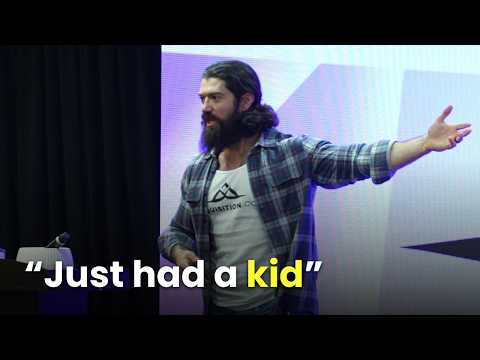
8:07>> I think um 40 stores. Yeah, cuz like we're we're making >> enough to open a store >> every year or two. >> every year. You know, then >> And when you have two, then you can open two. Yeah. >> less >> So, if that's what sounds easier to you, then I would recommend doing that. >> Yeah. So, the reason that we haven't gone through that road and we obviously are dabbling on the D2C is kind of like building a team that can scale like in different markets cuz obviously we're restrained to staying in our mar in our location for now. Like I just had a kid, so obviously like time to to launch these things is time sensitive. Like I never
8:50>> Why is it time sensitive? You mean time sensitive in the amount of time you're going to put into it, not like there's an urgency. >> of time you're going to put into it. >> Got it. >> Cuz uh basically hiring for let's say someone to go open, it would be you're hiring for a a job that isn't doesn't exist yet. Other than we're used to just open a store, put a GM like a GM in, you know, give up the ops, get it up to going, but if you're trying to open into other markets, like what do you recommend?
9:16Like if it's not in your own city or like in like a different province or state, like that are better markets. >> Yeah, you you save up money from the one that's making money and you front the cash just like a franchisee would to open up another location and you get return on invested capital. >> Okay. >> So, you say I've got my $400,000 in profit at the end of the year, I'd probably switch to a C corp, so you get at least 20% treatment rather than net income. I don't know how you've, ch- you know, set up right now. And then within the C-corp, you're going to open up new locations, probably have LLCs underneath the C-corp. And then you'll plow cash into the new LLC that opens up location number two. And then you front the capital the same way any other owner would open it. And that means that you're going to need to hire people before, you know, it's open. Um but that's the game. And so, if that's the game that you think is easier, then do that game.
10:01>> Yeah. >> I would just I would just strongly encourage you not to start another business. >> Mhm. >> Cuz you have a newborn on the way. >> Yeah. >> [laughter] >> Okay. >> Right? Is that like >> Yeah. >> I don't feel super sold. >> Yeah, it's just kind of >> What are you going to do that's not that? >> What am I going to do that's not open more stores? >> Yeah, well, we we just walked through this. So, you said you don't want to do the hybrid thing. Okay.
10:27>> Mhm. >> We walked through the 40 stores. >> Yeah. >> Why do you still want to do this this opening the direct-to-consumer brand? >> No, that's not what I'm thinking about. I just thought it would be like a, you know, a side revenue cuz we're already pushing like retail coffee. What's another online distribution for to grow the brand, you know? Grow the brand and national reach of our coffee.
10:53Yeah. >> Starbucks became Starbucks. And then everyone knew the brand, and then people started buying Starbucks. But by percentage of revenue, I would almost guarantee that Starbucks the vast majority is from people walking in the store still even in the online world that we live in today. Someone can fact check me and probably I'm wrong, who knows. But I'm pretty sure I'm right. >> Okay. Yeah. >> But you just this like are are you sold on this? I'm like still sensing >> uh No, I'm just still kind of obviously when you say 40 stores versus 360 stores, what's easier? Obviously, there's there's two devils in each side.
11:25Obviously, one is you personally putting in the sweat sweat and sweat to do that or the franchisees where you risk brand identity and like branding, service, quality control. >> pick what franchisees you take on. >> Yeah. >> So, you could just say we only work with these types of stores, and that's the model. >> Okay. >> Does that work? >> Yeah, that works. >> You want to do that instead? >> Uh maybe we'll do a hybrid model of both. >> [laughter] >> Why not, right?
11:51>> No. >> I see it all the time. It's like franchises and self-owned locations, like corporate-owned franchises. >> So, let me I'll give you I talked to you a lot of franchisors. Let me tell you why that happens. Most of the time it's because the franchisor couldn't make up their mind. So, I'm a big believer. Like I I own a franchise. Um and we were a franchise when we came into it, and I did this math equation. And then they were like, man, I'd rather just own them all. And I was like, great, let's do that. So, we bought out 18 franchises, or 22nd was 18 or 27, whatever. And then we just made it the corporate brand, and we just own everything corporate because we thought the franchisees were too hard to manage, and it was easier for us to keep our standards the way we wanted them to. And that's what we did. There's also franchises super close friend of mine, Rick Mayo from Alloy. Uh super successful franchise, and it's a franchise.
12:38>> Mhm. >> So, there's nothing wrong with either path. You just have to know I just like know who you are, know what business you're getting into, put your blinders on. There's a reason that horse races have them, keeps you focused on the goal, and then go all in. >> Yeah. >> I think right now you have a commitment issue. >> Cuz I have both both models going, and personally I from dealing with both models, I do think self-owned corporate-owned operating is probably the way to go. >> Well, then just >> Yeah. >> then then don't look back. >> Yeah, okay.
13:03>> Cuz it's going to be shitty there, too. And this is real, this is for everybody. I write my When I have When I have these decisions that I do this on a lot, I write when I make the decision, I write out a letter to myself of the exact reasoning of why I'm making the decision, so that I don't have to retrace the path over and over again, cuz otherwise you waste so many cycles in your mind about Oh, you know what? And then you have one bad day here, and you're like, I should have done the hybrid thing. You're going to have bad days here, and you have had bad days over here.
13:29>> Yeah. >> So, just know the reasons and then stick with it, and then you can always revisit on your phone until eventually it becomes a loop that you don't listen to anymore. >> Yeah, got it. Sounds good. Thank you. >> Yeah. >> [applause] >> We got there. I needed the W. If you like this video and you're a business owner who wants to break through your current revenue ceiling, I distilled every lesson from scaling 10 businesses past 10 million and three businesses past 100 million into a completely free scaling roadmap that I've used to go from zero to one, zero to 10, and zero to 100 plus. And so, you can click here and you can check it out. Again, absolutely free, and since you're a business owner, I appreciate you, and enjoy.